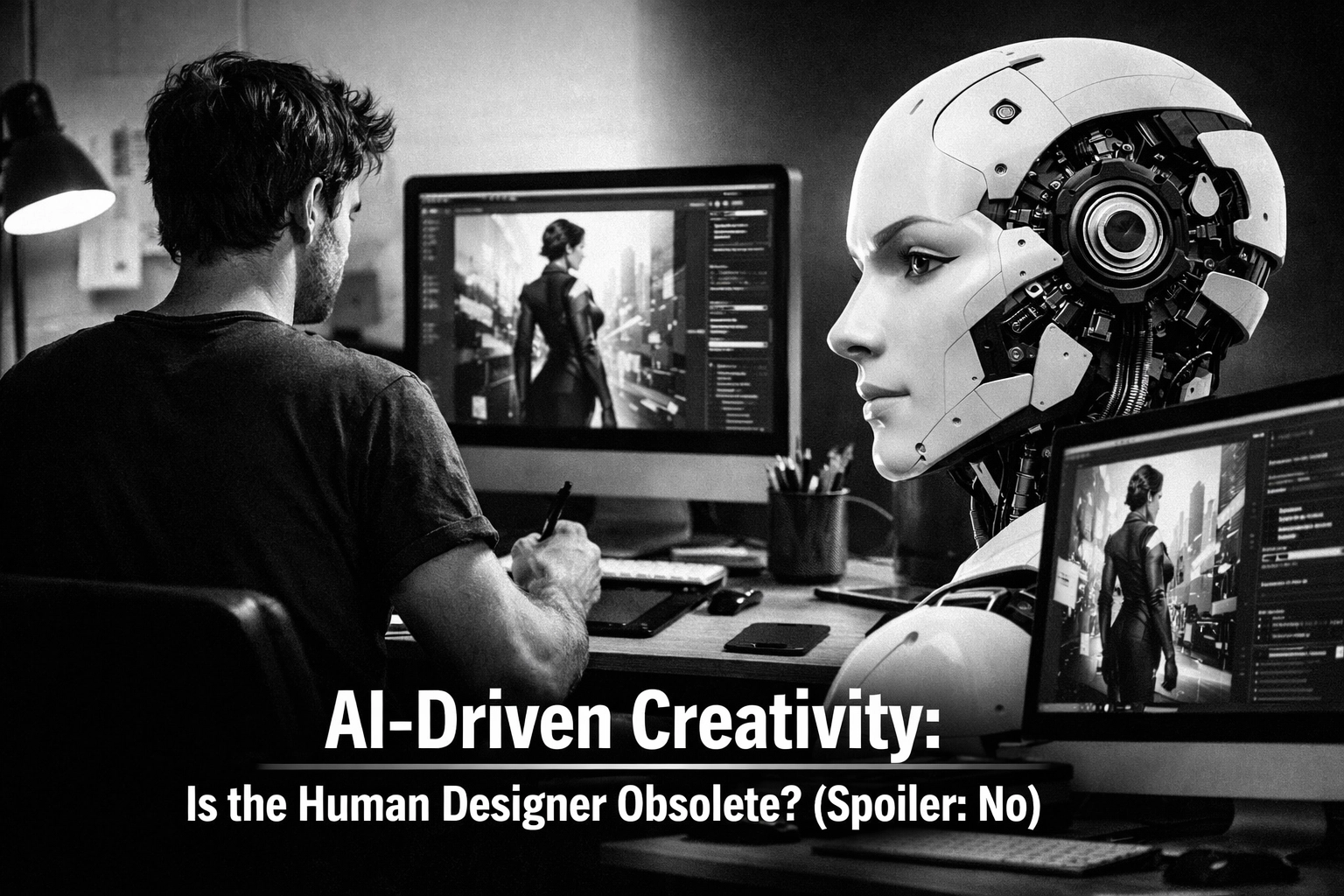
It is Wednesday, March 11, 2026, and if you listen closely, you can hear the collective sound of a million keyboards typing the same prompt: "Generate a logo for a high-end law firm that looks trustworthy but modern." In the time it took you to read that sentence, an AI probably spit out forty variations.
There is a lot of noise out there right now. People are panicking. They see Midjourney and DALL-E and Sora and they think, "Well, that is it. The era of the human designer is over. Wrap it up, folks. The robots won."
But here is the truth from the front lines of digital marketing at Gurupresario: AI is not taking the job of the designer. It is taking the job of the technician. There is a massive difference between knowing how to push buttons and knowing how to tell a story that makes someone pick up the phone.
The Great Robot Panic of 2026
We have all seen the headlines. AI can now design a website in minutes. It can color-correct a photo in seconds. It can even suggest a brand color palette based on the "vibe" of your business. For professionals like attorneys, doctors, and CEOs, this sounds like a dream. It is fast, it is cheap, and it does not require a three-week turnaround.
However, if everyone is using the same algorithms to generate their "unique" brand, something strange happens. Everything starts to look exactly the same. We call this the "Me-Too" Marketing Trap. If your law firm looks exactly like the one down the street because you both used the same AI prompt, you have not built a brand. You have built a digital wallpaper.
AI is incredibly good at execution. It is a world-class intern. It can handle the repetitive, boring, soul-crushing tasks that used to take human designers hours, things like background removal, layout optimization, and generating twelve different versions of an ad for A/B testing. But AI does not have a pulse. It does not understand the nuance of a local community or the emotional weight of a medical diagnosis.
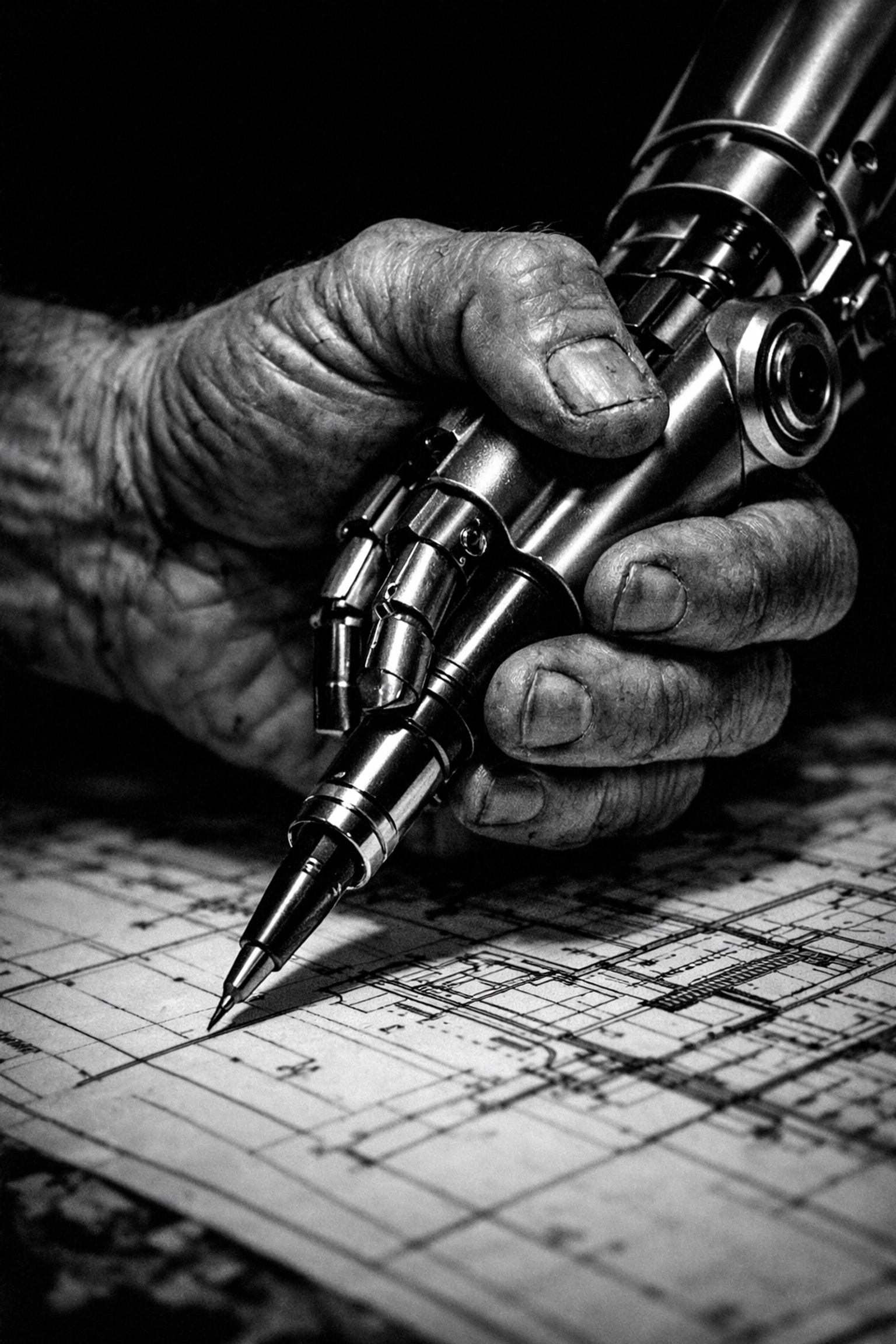 A stark black and white contrast showing a robotic hand holding a paintbrush while a human hand directs the canvas, symbolizing the balance of power in modern design.
Why Execution is Cheap but Vision is Expensive
At Gurupresario, we have helped everyone from dentists to high-level executives build their brands. One thing remains constant: people do not buy what you do; they buy why you do it.
An AI can generate a technically perfect image of a stethoscope for a doctor’s office. It can create a sharp, geometric logo for an attorney. But it cannot sit in a room with you, listen to your life story, and figure out how to translate your personal values into a visual identity that screams "trust."
The role of the designer in 2026 has shifted from being a pixel-pusher to being a creative director. The "new" designer uses AI to move faster, but they use their human brain to ensure the output actually means something. They are the ones who say, "Yes, this AI-generated layout is clean, but it feels cold. Let us add a human element here to make it feel more approachable."
This is where the Gurupresario Podcast often dives deep. We talk about the "Handshake Effect": the idea that even in a digital world, people want to feel like they are doing business with a person, not a machine. If your design feels like it came out of a vending machine, you lose that connection before the customer even reads your first paragraph.
The Uncanny Valley of Automated Branding
Have you ever looked at an AI-generated person and felt like something was just... off? That is the uncanny valley. The same thing exists in branding. When a brand is entirely AI-driven, it lacks the "scars" and "texture" that make a business feel real.
For a law firm, authority is everything. For a doctor, empathy is everything. These are deeply human traits. AI can simulate them, but it cannot originate them. A human designer understands the psychological impact of a specific shade of navy blue or the way a certain font weight conveys stability. They understand that design is not just about looking "cool": it is about solving a business problem.
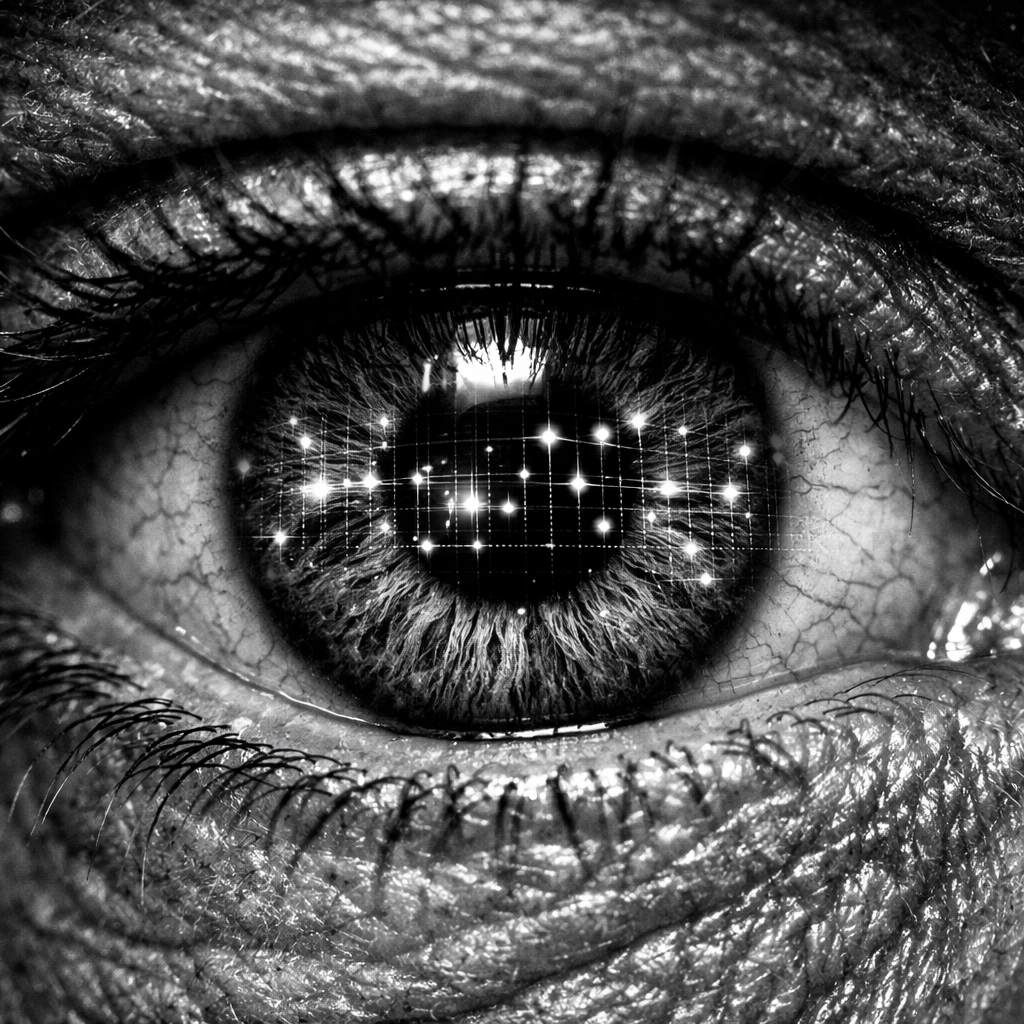 A black and white close-up of a human eye reflecting a digital grid, representing the human perspective overseeing artificial intelligence.
Human Storytelling in a World of Algorithms
As a media expert, I have spent years helping clients understand that their brand is a living, breathing entity. Whether we are working on video production or a new website, the goal is always the same: storytelling.
AI is a library, not an author. It can give you all the words, but it cannot write the book. It does not know that your law firm was founded because your grandfather was cheated by a big corporation. It does not know that your dental practice focuses on "anxiety-free" care because you had a bad experience as a kid.
Those stories are your competitive advantage. In a world where AI can create "perfect" content, "perfect" becomes boring. Authenticity becomes the new premium. The human designer is the guardian of that authenticity. They take the raw speed of AI and refine it through the lens of your specific story.
If you want to hear more about how we blend these elements, check out episode 19 of the Gurupresario Podcast where we discuss the evolution of digital storytelling.
Your Competitive Advantage is Being a Person
If you are a business owner, you should not be afraid of AI. You should be afraid of being boring.
The professionals who will win in 2026 are those who use AI to handle the "math" of marketing so they have more time to focus on the "magic." This is what we do at Gurupresario. We use every tool in the shed: including the latest AI: to make sure your brand is seen, heard, and remembered. But we never let the tool drive the car.
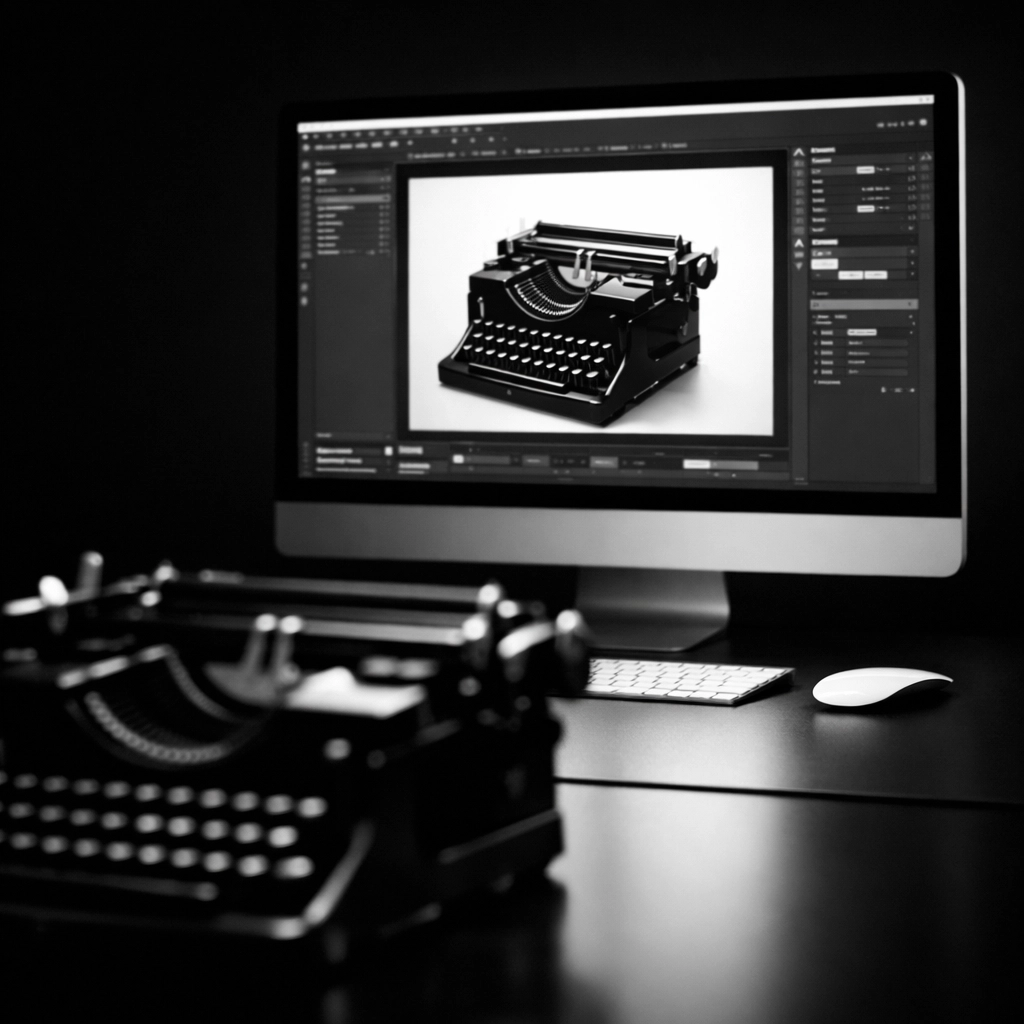 A black and white image of a vintage typewriter sitting next to a modern high-end computer, showing the bridge between traditional storytelling and modern technology.
The human designer is not obsolete. They are more important than ever because they are the filter that keeps your brand from becoming a generic commodity. They are the ones who ensure that your digital presence actually reflects the person behind the business.
Is Your Brand Future Proof?
The question is not "Will AI replace my designer?" The question is "Is my current branding strong enough to survive a world where everyone has access to the same tools?"
If your website feels like a digital business card from 2015, or if your social media looks like a series of stock photos, it is time to level up. You need a strategy that combines high-tech efficiency with high-touch humanity. You need to stop being a "best-kept secret" and start being a market leader.
We specialize in helping attorneys, doctors, and executives navigate this exact transition. From video production to full-scale brand identity, we ensure that your company grows by telling the right story to the right people.
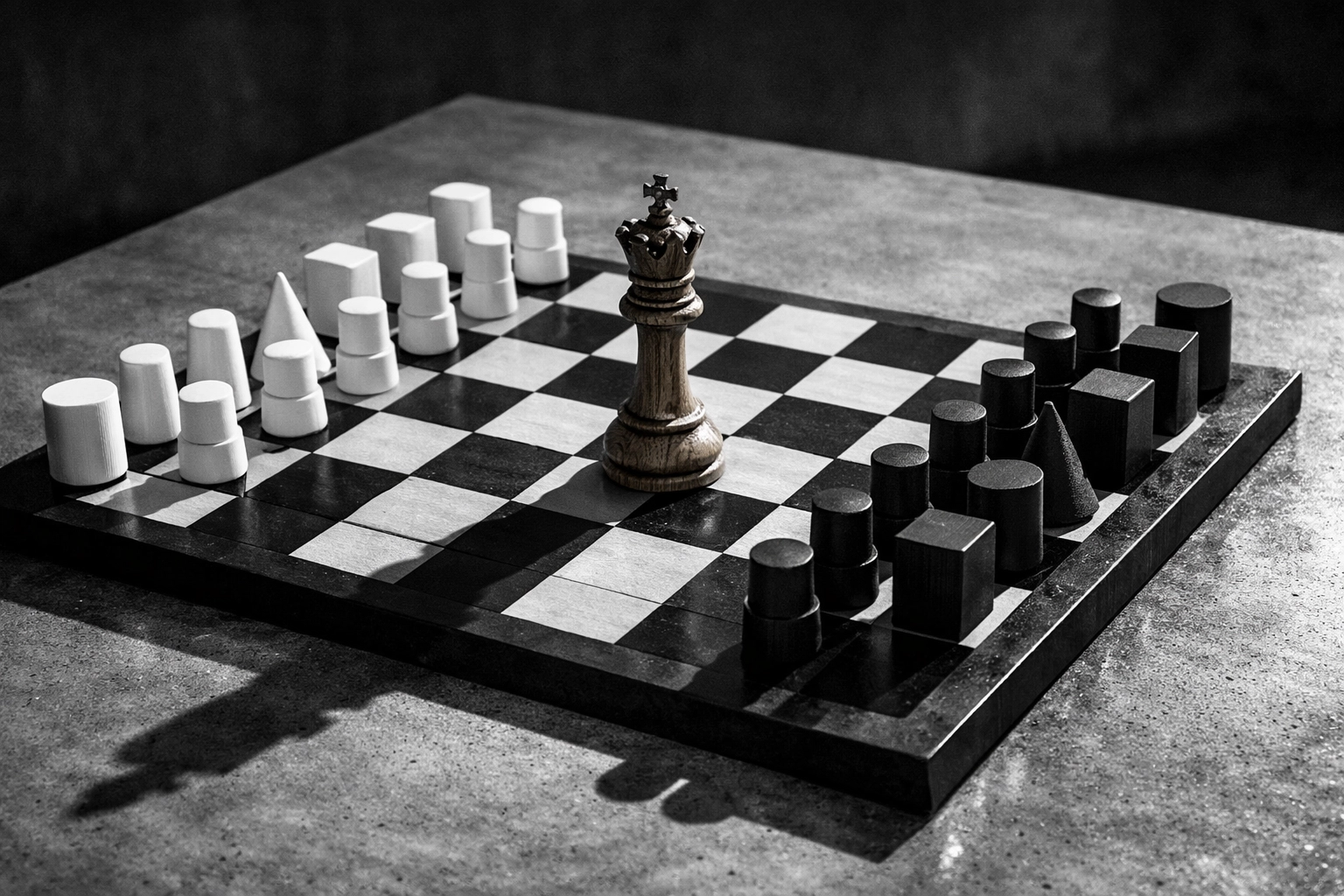 A black and white minimalist shot of a chessboard where the king is a human silhouette, representing strategic leadership in a complex digital environment.
Do not let your brand get lost in the sea of AI-generated noise. The tools have changed, but the goal remains the same: connection.
If you are ready to take your brand to the next level and want to see how a real human strategy can amplify your business, let us talk. We can help you navigate the noise and build something that actually lasts.
Book a complimentary one on one session with a media marketing expert at https://calendly.com/mausanchez/meet or call us directly at (512) 988-5194.


