Let me guess: your social media calendar looks like a patchwork quilt of random holidays, industry news, and whatever meme your intern thought was funny. You're posting three times a week because some guru said so. You've got blog posts about everything and nothing. And your ROI? Let's not talk about it.
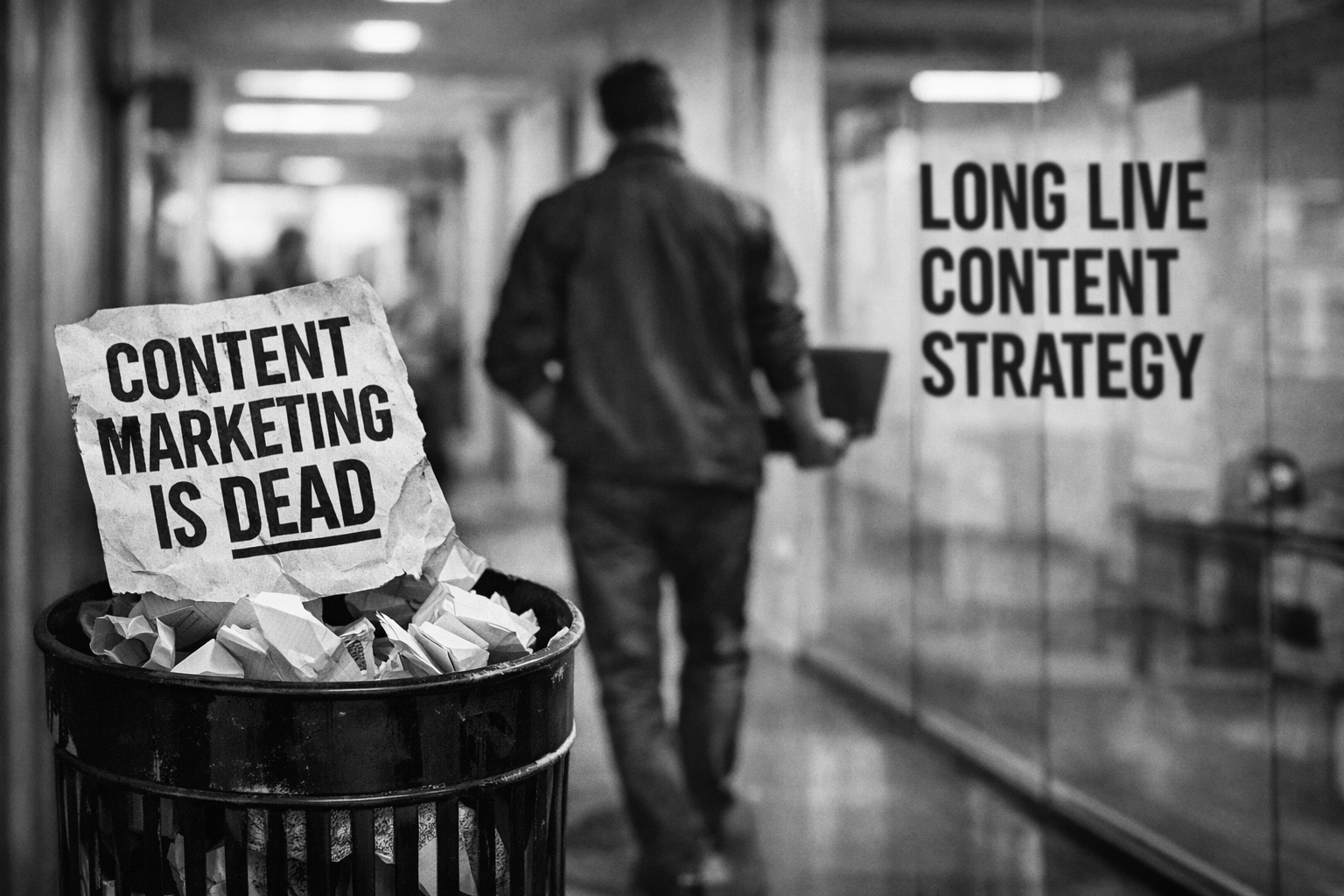
Here's the uncomfortable truth: content marketing, as most businesses practice it, is dead. Not because the concept is flawed, but because everyone's doing it backwards.
The "Just Post Something" Epidemic
We've worked with attorneys who post legal tips every Tuesday like clockwork. Doctors who share health facts between patient appointments. Executives who let their marketing coordinator "handle the Instagram." And you know what all these businesses have in common? None of them can tell us what their content is actually doing for their business.
This is the content marketing zombie apocalypse. Businesses shuffling forward, posting content because "that's what you're supposed to do," with zero strategic direction behind any of it.
The metrics look okay on paper. You're getting likes. Maybe some shares. Your engagement rate isn't terrible. But here's the question that makes everyone uncomfortable: Is any of this content actually moving your business forward?

Why Random Posting Doesn't Work Anymore
The internet is drowning in content. Over 7 million blog posts get published every single day. Your ideal client sees hundreds of pieces of content before breakfast. In this environment, being "pretty good" or "consistent enough" is the same as being invisible.
Random posting fails for three specific reasons:
It lacks context. That brilliant blog post about industry trends? Your audience has no idea how it relates to your services, your expertise, or why they should care. It's just noise.
It has no through-line. Each piece of content exists in isolation. There's no narrative building, no strategic journey you're taking your audience on. Just a series of disconnected moments that never add up to anything meaningful.
It serves no master. When you ask "why are we posting this?" the answer is usually "because it's Tuesday" or "because everyone else is." Not because it serves a specific business objective.
We've seen this pattern across every industry we work with. A dental practice posts oral health tips but never connects them to their specific services. A law firm shares legal updates but never establishes their unique perspective or expertise. An executive posts thought leadership that sounds exactly like every other executive in their space.
The result? Wasted time, wasted budget, and a sneaking suspicion that content marketing doesn't actually work.
Content Strategy vs. Content Marketing: What's the Difference?
Here's where things get interesting. Content marketing isn't the problem, the absence of content strategy is.
Think of it this way: content marketing is the car, content strategy is the map. You need both to get anywhere useful.
Content strategy is the big-picture thinking. It's the why behind everything you create. Why this message? Why this audience? Why now? How does this piece fit into our overall business objectives? What story are we telling across all our touchpoints?
Content marketing is the execution. It's writing the blog post, recording the podcast, producing the video, scheduling the social posts. It's the tactical work of creating and distributing content.
Most businesses jump straight to content marketing, they start creating, without ever developing a content strategy. It's like building a house by just nailing boards together and hoping it turns into something livable.

At Gurupresario, we've helped everyone from medical professionals to corporate executives understand that effective content requires both. The strategy tells us what we should create and why it matters. The marketing brings that strategy to life through targeted campaigns that actually reach people and drive action.
The Real Cost of Strategy-Free Content
Let's talk numbers for a second. The average business spends between $5,000 and $15,000 per month on content creation. That includes writing, design, video production, social media management, and all the rest.
Now imagine that 70% of that content doesn't actually serve your business objectives. It's just... there. Taking up space on the internet. That's $3,500 to $10,500 every single month going into the void.
But the real cost is higher than that. It's the opportunities you're missing while you're busy creating the wrong content. The clients who never understood what makes you different. The referral partners who couldn't articulate your value. The market position you never claimed because your content never made the case.
We've worked with brands who spent years posting content before we helped them develop an actual strategy. The difference is night and day. Suddenly, every piece of content has a purpose. Every video, every podcast episode, every social post is part of a larger narrative that positions the brand, educates the market, and drives business results.
How We Build Content That Actually Works
Strategy first. Always.
When a client comes to us wanting to "do more video" or "start a podcast" or "get serious about social media," our first question isn't about production schedules or posting frequency. It's: What's the story you're trying to tell?
We start by understanding the business holistically. What are your goals? Who are you trying to reach? What makes you genuinely different in your market? What do you want to be known for? What action do you want people to take?
Then we build the content strategy around those answers. This isn't a content calendar: it's a roadmap. It defines your messaging pillars, your audience segments, your strategic themes, and how all your content works together to move people through a journey.

Only after the strategy is solid do we start thinking about execution. And this is where content marketing shines. Because now we're not just creating content: we're creating the right content with intention behind every piece.
The Strategy-First Framework
Here's how we approach content strategy for our clients:
Define the North Star. What's the ultimate business objective? More clients? Higher-value clients? Market leadership? Everything flows from this.
Identify the audience. Not "small business owners" or "people who need legal services." We're talking specific, detailed audience segments with specific needs, challenges, and decision-making processes.
Establish messaging pillars. These are the three to five core themes that everything you create should ladder up to. They're based on your unique value, your expertise, and what your audience actually cares about.
Map the journey. How do you move someone from complete stranger to loyal client? What do they need to understand at each stage? What questions need answering? What objections need addressing?
Plan the ecosystem. How do all your content types work together? Your podcast feeds your blog. Your video becomes social content. Your email nurtures relationships. Everything connects.
This is storytelling at scale. And storytelling is what we do. Whether we're helping a doctor build their personal brand through podcasting or creating a video content strategy for a law firm, the principle is the same: strategic narrative that serves clear business objectives.
What This Looks Like in Practice
Let's get concrete. We recently worked with a corporate executive who wanted to establish thought leadership in their industry. They'd been posting on LinkedIn inconsistently for two years with minimal results.
We built a content strategy around three messaging pillars tied directly to their expertise. Then we created a content ecosystem: a monthly podcast where they interviewed other industry leaders, which we repurposed into blog posts, social clips, email content, and thought leadership articles.
Each piece of content served the strategy. Each piece moved their audience through a journey. Each piece reinforced their positioning. Within six months, they went from invisible to industry voice.
That's not magic. That's strategy.

The Evolution of Content
Content marketing isn't dead: directionless content marketing is dead. The brands winning attention and loyalty in 2026 aren't the ones posting the most. They're the ones posting with purpose.
This shift requires thinking about your brand differently. Not as a collection of services you offer, but as a story you're telling. Not as posts you're obligated to create, but as a strategic narrative you're building over time.
It requires partnership with people who understand both the strategic thinking and the tactical execution. Who can help you see the big picture while handling the details. Who've done this across industries and know what actually moves the needle.
The good news? Once you have the strategy in place, content marketing becomes dramatically more effective. You're not just busy: you're productive. You're not just posting: you're building. You're not just creating content: you're creating business results.
Ready to Build a Real Content Strategy?
If you're tired of posting into the void and ready to create content that actually serves your business, let's talk. We've helped attorneys, doctors, dentists, and executives across industries develop content strategies that work: and execute the content marketing that brings those strategies to life.
Book a complimentary one-on-one session with our media marketing experts at https://calendly.com/mausanchez/meet. Or if you'd rather talk now, give us a call at (512) 988-5194.
Because content marketing isn't dead. But doing it without strategy? That's been dead for years. Time to do it right.


