Summary: Google Maps has replaced the Yellow Pages as the primary tool for local business discovery, but most businesses are drowning in obscurity despite having a profile. This post breaks down why over 80% of your potential customers are finding your competitors instead of you, and the three critical factors Google uses to decide who gets the phone call and who gets buried on page two.
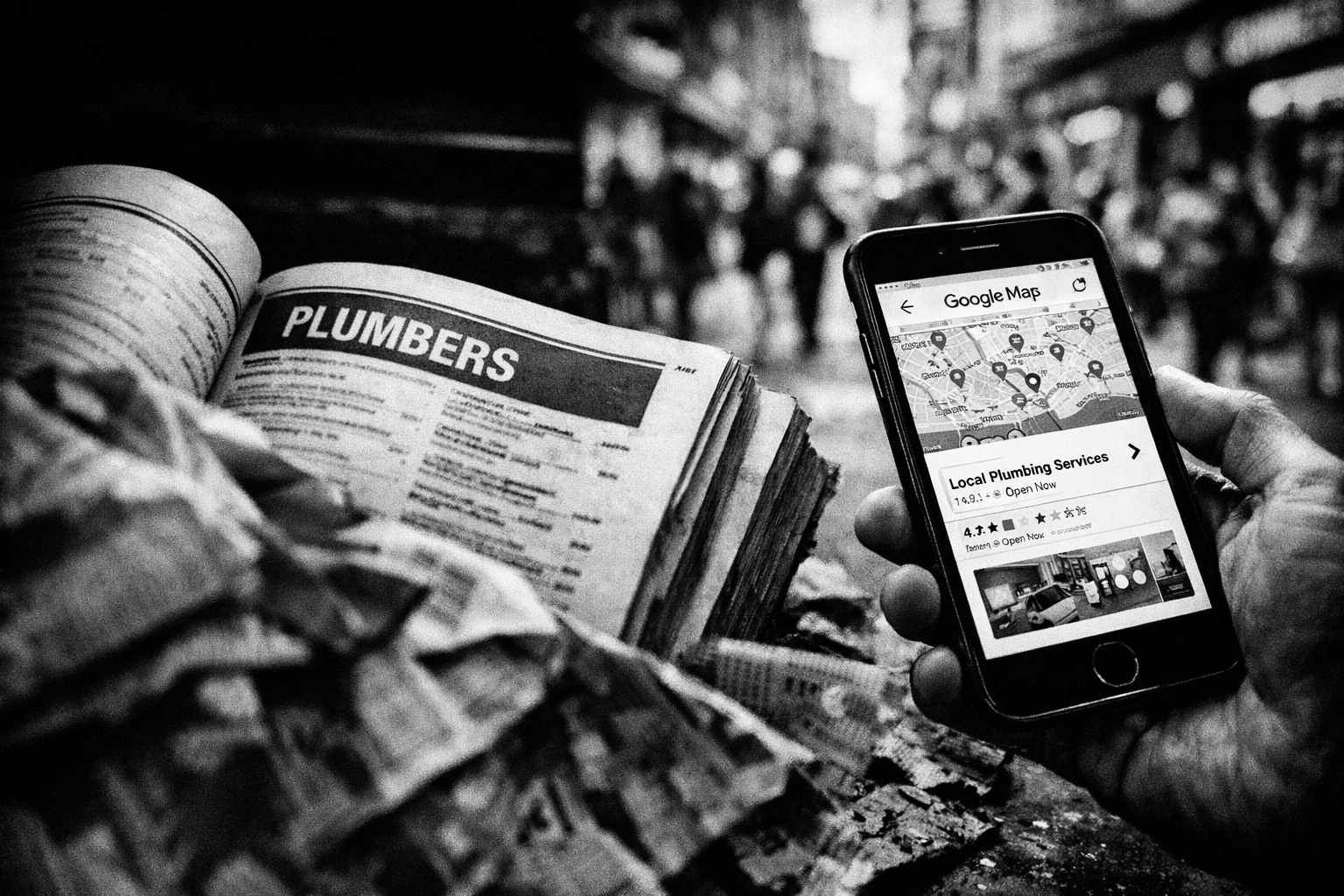
Remember the Yellow Pages? That giant book that showed up on your doorstep once a year, and you'd flip through it looking for a plumber at 2 AM while water flooded your kitchen?
Yeah, nobody misses that.
But here is the plot twist: Google Maps is doing the exact same thing now, except it is happening in real-time, on everyone's phone, and your competitors are paying attention while you are not.
If your phone has been suspiciously quiet lately, this is probably why.
The New Reality of Local Search
More than 80% of consumers use search engines to find local businesses. Not social media. Not word of mouth. Not driving around hoping to spot a sign. They open Google Maps, type in what they need, and pick from the top three results.
That is it. Three spots. Three businesses get the bulk of the calls, the foot traffic, the revenue.
Everyone else? Buried.
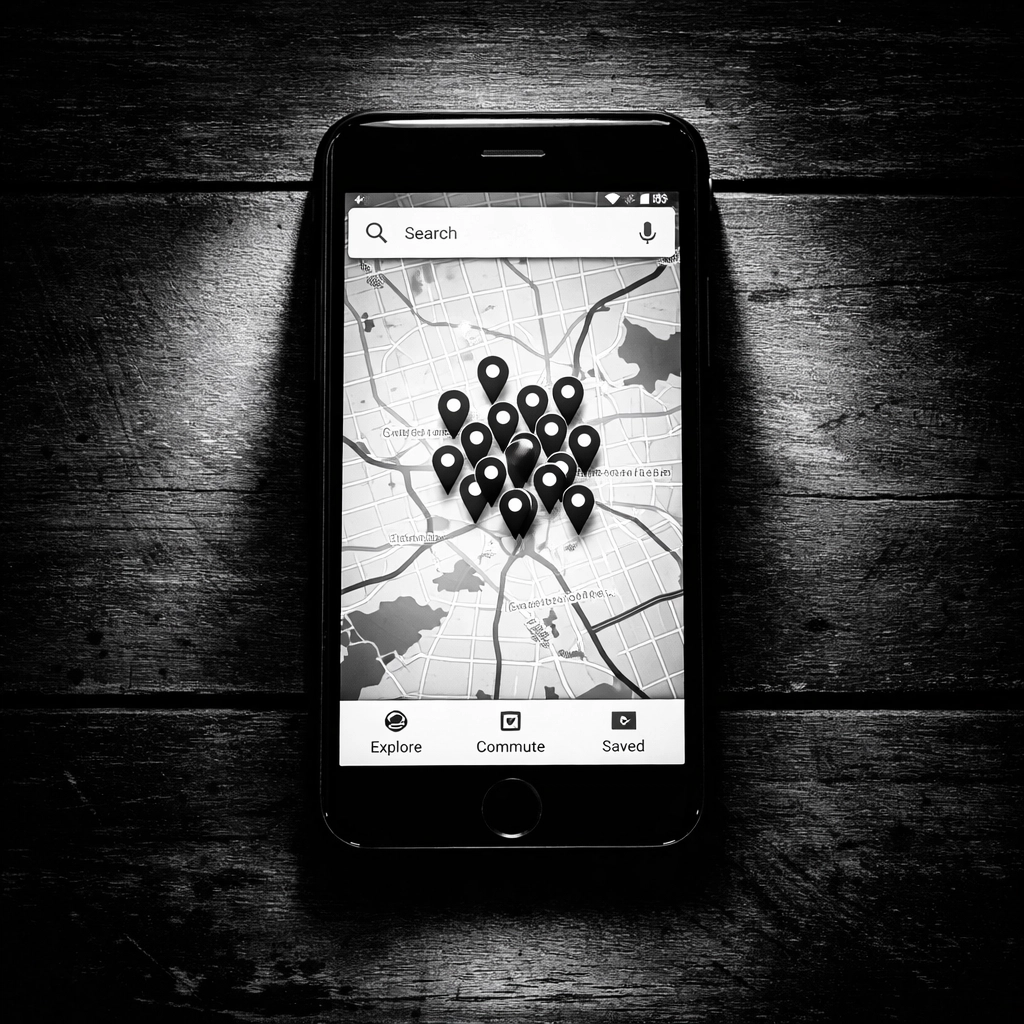
And just like the Yellow Pages used to charge you extra for a bigger ad or bold font, Google has its own system for deciding who gets prime real estate. Except now, instead of paying for placement, you are competing on relevance, prominence, and whether or not people can actually figure out how to contact you.
The businesses winning on Google Maps in 2026 are not necessarily the biggest or the oldest. They are the ones who understand that your Google Business Profile is not a "set it and forget it" situation, it is a living, breathing storefront that Google's AI is constantly evaluating.
Why Your Business Is Getting Buried
Let's get brutally honest: if your phone is not ringing, it is probably because Google does not think you are worth showing to anyone.
Harsh? Maybe. But accurate.
Google's algorithm looks at three main factors when deciding who shows up in the Local Pack (those coveted top three spots):
1. Relevance – Does Google actually understand what you do and where you do it?
If your profile says you are a "general contractor" but your services include roofing, remodeling, landscaping, and somehow also tax prep, Google has no idea who to show you to. Vague profiles get vague results. Or more often, no results at all.
2. Prominence – Does anyone trust you?
Reviews, backlinks, mentions across the web, and how often people interact with your profile all signal to Google that you are legit. If you have 3 reviews from 2019 and your last profile update was during the pandemic, Google assumes you are either out of business or not taking things seriously.
3. Conversion – Can people actually reach you?
This one is simple but often overlooked. If your hours are wrong, your phone number is disconnected, or your website takes 10 seconds to load, Google is not going to waste anyone's time sending them your way.

Businesses that nail all three? They dominate. Everyone else is fighting for scraps.
What Actually Drives Visibility in 2026
Here is what the businesses ranking in the top three are doing differently:
They treat their Google Business Profile like a social media account. Regular updates. Fresh photos. Posts about what they are working on. Google rewards activity because it signals that you are open, engaged, and customer-focused.
They manage reviews like their business depends on it. Because it does. Businesses with complete profiles that actively respond to reviews get 7 times more clicks than those that do not. And yes, responding to the bad reviews matters just as much as celebrating the good ones.
They make sure everything matches. Your profile, your website, your social media: if the details do not align, Google gets confused. And when Google gets confused, it just shows someone else instead.
They define their service areas properly. This is especially critical for service-based businesses. If you are a plumber in Austin but your profile thinks you serve San Antonio, Houston, and Dallas too, you are going to show up for searches you cannot actually fulfill: and tank your relevance score in the process.
The Bigger Picture: Your Brand Is Not Just Your Logo
This is where most businesses miss the point entirely.
Your Google Business Profile is not some standalone thing you optimize once and move on. It is part of your brand story. It is how people experience you before they ever talk to you.
At Gurupresario, we have worked with attorneys, doctors, dentists, and executives across dozens of industries. And the ones who win are not the ones with the fanciest websites or the biggest ad budgets. They are the ones who understand that every touchpoint: your Google profile, your social media, your content, your reputation: is a chapter in the same story.

If your Google profile says one thing, your website says another, and your social media is silent, you are not telling a story. You are creating confusion. And confused customers do not buy: they move on to the next result.
This is why we focus so heavily on brand storytelling with our clients. Whether it is through podcasting, video production, or content strategy, the goal is always the same: create a consistent, compelling narrative that makes people want to work with you: not just find you.
The Cost of Doing Nothing
Let's talk about what happens if you ignore all of this.
Your competitors are not ignoring it. They are updating their profiles. They are asking for reviews. They are posting photos of their latest projects. And every time they do, Google's AI learns a little more about them: and decides they are the better option.
Meanwhile, your outdated profile with the wrong hours and photos from 2021 is sending a message too: "I am not paying attention. I am not invested. I am probably not even in business anymore."
And Google? Google listens.
The volatility of local search in 2026 means you can go from visible to invisible faster than ever. One week of inactivity does not kill you. But six months? A year? That is how businesses disappear.
What You Should Do Next
If you are reading this and realizing your Google Business Profile is a mess (or worse, you are not even sure if you have one), do not panic.
Start simple:
- Claim and verify your profile if you have not already
- Update your business hours, phone number, and service areas
- Add recent, high-quality photos of your work, your team, your space
- Ask your last five happy customers to leave a review
- Post an update at least once a month
But if you want to do this right: if you want to stop guessing and start showing up where it matters: then you need a strategy that connects your local visibility to your broader brand story.
That is what we do. We help businesses stop being invisible and start being unforgettable.
Book a complimentary one-on-one session with a media marketing expert at https://calendly.com/mausanchez/meet or give us a call at (512) 988-5194. Let's make sure when someone searches for what you do, your name is the one they see.


