Summary
Short-form video fatigue is real, and your audience is drowning in a sea of formulaic clips. This post explores why viewers are burning out on endless scrolling and reveals the strategic shifts brands need to make in 2026, from choosing authenticity over polish to building micro-documentaries that actually tell a story. If your videos are getting lost in the feed, it is time to break the pattern.
We need to talk about the elephant in the room. Or rather, the 15-second dance trend that everyone stopped caring about six months ago.
Short-form video was supposed to be the answer to everything. TikTok exploded. Instagram pivoted to Reels. YouTube launched Shorts. Every marketing guru on the planet screamed that if you were not posting short-form content, you might as well close up shop.
And now? We are all exhausted.
Your audience is tired. You are tired. Even the algorithm seems tired of the same hooks, the same trending sounds, the same "Wait for it..." captions that never deliver anything worth waiting for.
Welcome to 2026, where short-form video fatigue is not just a buzzword, it is the reality every brand needs to navigate.
Why Everyone Is Burned Out on Short-Form Video
Let's be brutally honest: the feed has become a wasteland of sameness.
Open any social platform right now and count how many videos follow the exact same formula. The jump-cut intro. The trending audio. The text overlay that says something like "POV: You just discovered..." followed by the most basic information imaginable.

The problem is not that short-form video stopped working. The problem is that everyone started doing it the exact same way. When every brand sounds identical, looks identical, and follows the same content playbook, nobody stands out. You just become more noise in an already deafening feed.
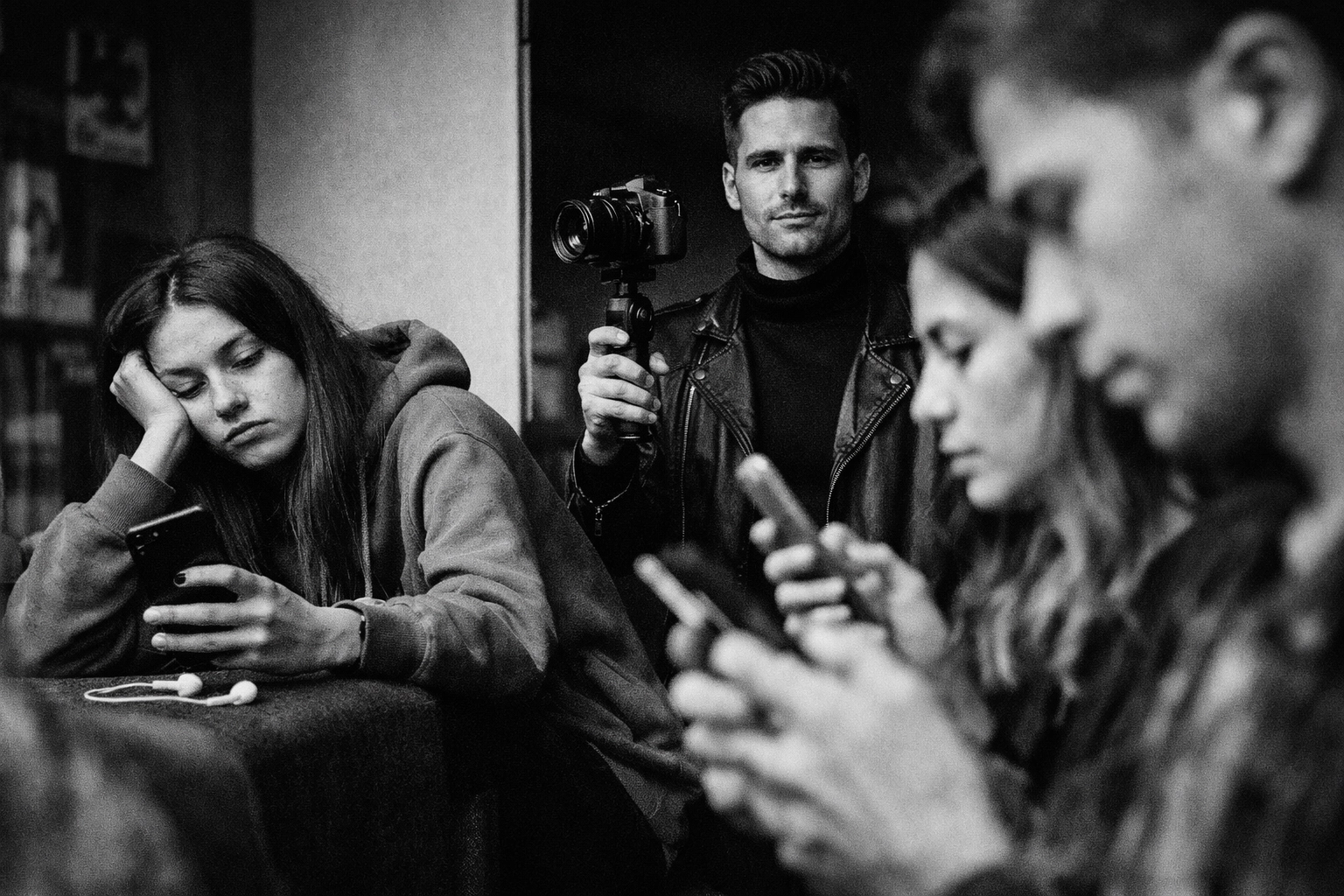
And here is what nobody wants to admit: your audience has developed scroll immunity. They have seen so many videos that their brains have learned to filter out anything that feels formulaic. They are not even consciously choosing to skip your content, their thumb is on autopilot, swiping past anything that does not immediately break the pattern.
This is not a reason to give up on short-form video. This is a reason to completely rethink your approach.
Authenticity Beats Polish Every Single Time
Here is the shift that actually matters in 2026: raw and real beats slick and scripted.
We spent years being told that our content needed to be polished, professional, and perfectly edited. Brand standards. Cohesive aesthetics. Consistent color grading. All of that made sense when everyone was competing on production value.
But now? The most engaging content looks like it was shot in a parking lot with a smartphone, because it probably was.

Think about the last video that made you actually stop scrolling. Chances are, it was not because of fancy transitions or cinematic lighting. It was because someone said something interesting, showed something unexpected, or shared a perspective that felt genuinely human.
Your audience does not want another perfectly curated highlight reel. They want to see the behind-the-scenes chaos. The mistakes. The unfiltered moments that prove there are actual humans behind your brand.
This is especially true for professional services. If you are an attorney, a doctor, a dentist, or a business executive, your audience does not connect with stock footage and corporate speak. They connect with you, your expertise, your perspective, your personality.
At Gurupresario, we have worked with everyone from law firms to medical practices to C-suite executives, and the pattern is always the same: the content that performs best is the content that feels the most human. Not because it is poorly made, but because it prioritizes connection over perfection.
Move Beyond the 15-Second Clip
Short-form does not mean shallow.
One of the biggest mistakes brands make is assuming that short-form content has to be surface-level. Quick tips. Snappy one-liners. Viral trends. But what if your short-form content actually told a story?
Enter the micro-documentary.
Instead of churning out dozens of disconnected clips, what if you created a 30-second to 2-minute video that actually took your audience somewhere? Not a full-length documentary, just a tightly edited narrative that has a beginning, middle, and end.
This could be a client success story. A day-in-the-life glimpse. A before-and-after transformation. The key is that it feels intentional, not random.

The data backs this up: 71% of marketers identify the 30-second to 2-minute range as the sweet spot for engagement. That is enough time to build genuine interest without losing attention spans.
And here is the bonus: when you focus on storytelling instead of trends, your content has a longer shelf life. A well-crafted story does not expire when the trending sound gets overused. It stays relevant because it is anchored in something deeper than a fleeting moment.
The Hook Still Matters, But Not the Way You Think
Yes, you still need to capture attention in the first few seconds. That has not changed.
What has changed is how you do it.
The old hook playbook was all about shock value and curiosity gaps. "You would not believe what happened next." "This one trick changed everything." "Wait until you see this."
Those hooks worked when everyone was new to short-form video. Now they feel manipulative and tired.
The new hook formula is simple: deliver value immediately.
Do not make people wait. Do not tease information you are going to reveal later. Just give them something useful, interesting, or surprising right from the jump.
If you are making a video about brand strategy, do not start with "Want to know the secret to growing your business?" Start with "Most brands waste six months on strategies that do not work. Here is why."
See the difference? One makes a promise. The other delivers immediately.
Cross-Platform Does Not Mean Copy-Paste
Let's talk about the efficiency trap.
A lot of brands think being strategic with short-form video means creating one piece of content and blasting it across every platform. TikTok, Reels, Shorts, LinkedIn: same video, different feeds.
That is not cross-platform strategy. That is lazy distribution.
Each platform has its own culture, audience expectations, and content norms. What works on TikTok might fall flat on LinkedIn. What crushes on Instagram Reels might feel out of place on YouTube Shorts.
The smarter approach is to create one core concept and adapt it for each platform. Same message, different execution. This way, you maintain consistency without boring your audience with redundant content.
For example, if you run a podcast like the Gurupresario Podcast, you could pull a 60-second insight for Instagram, create a 90-second deep-dive for YouTube Shorts, and turn the most tactical advice into a quick-hitting LinkedIn video. Same conversation, three distinct pieces of content tailored to where your audience is actually paying attention.
This is not more work: it is smarter work.
Stop Chasing Virality. Start Building Trust.
Here is the hard truth: going viral does not mean anything if it does not lead to business results.
You could rack up a million views on a trending dance video, but if none of those viewers know what you do or why they should care, what was the point?
The brands that win in 2026 are not the ones chasing viral moments. They are the ones building trust through consistent, valuable content that positions them as the go-to expert in their space.
That means showing up regularly. Sharing real insights. Demonstrating your expertise without gatekeeping. Giving your audience reasons to care about you beyond entertainment value.
This is where founder-led content and personal branding become critical. Your audience does not just want to know about your company: they want to know about the people behind it. What you believe. How you think. Why you do what you do.

When people trust you, they do not just watch your videos: they reach out. They book calls. They become clients.
The Gurupresario Approach to Standing Out
At Gurupresario, we do not believe in random content drops or chasing algorithm trends. We believe in strategic storytelling that builds brands, not just followings.
Whether we are producing podcasts, creating video content, or developing full-scale brand strategies, the goal is always the same: help our clients tell stories that resonate and drive real business results.
That means understanding your brand as a whole: not just your social media presence, but your positioning, your messaging, your unique value in the market. It means focusing on the content formats that actually move the needle for your specific audience.
And it means recognizing that in a world saturated with short-form video, the brands that stand out are the ones willing to be different.
If you are ready to break free from the scroll and build a content strategy that actually connects with your audience, let's talk. Book a complimentary one-on-one session with a media marketing expert at https://calendly.com/mausanchez/meet or give us a call at (512) 988-5194. We will help you turn your brand story into content that cuts through the noise.


