
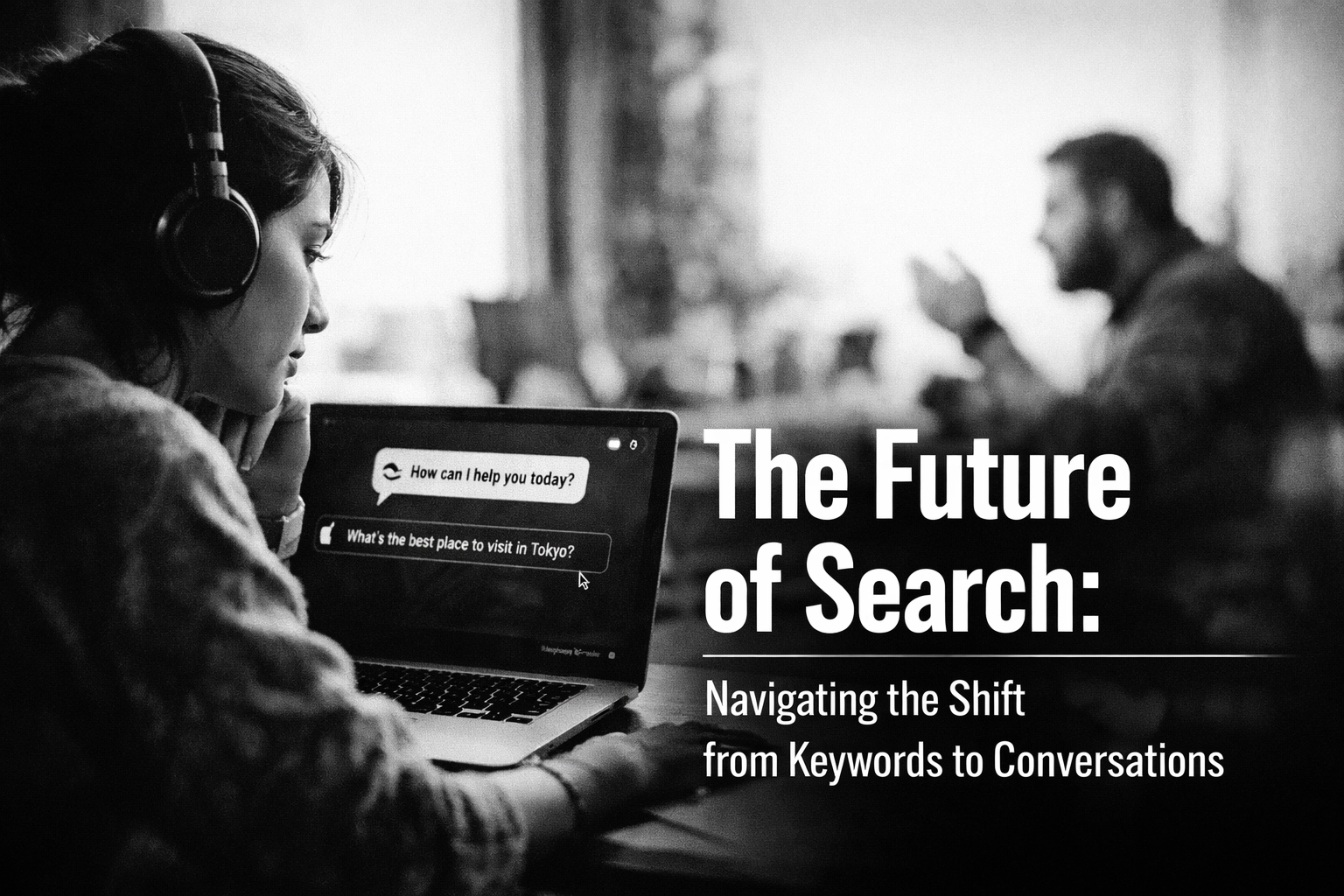
Remember the days when we used to treat Google like a very literal, slightly dim-witted librarian? You would walk up and bark "Austin personal injury lawyer" or "Best pizza near me" and hope the algorithm spit out something that was not a virus. It was a cold, transactional relationship built on the backs of awkward keyword stuffing and backlink hunting. Well, welcome to March 2026. The librarian has been replaced by a highly sophisticated, slightly caffeinated AI assistant that wants to have a full-blown conversation with you.
If you are still building your digital presence around the idea that people are typing fragmented phrases into a search bar, you are basically trying to win a Formula 1 race with a horse and buggy. The shift from keywords to conversations is not just a trend; it is a total overhaul of how humans interact with information. For the attorneys, doctors, and executives we work with at Gurupresario, this means the old playbook is not just outdated, it is a liability.
The Robotic Keyword Is Officially Dead
For years, digital marketing was a game of "hide and seek" where the business would hide keywords in their metadata and hope Google would find them. We optimized for robots because robots were the gatekeepers. But as of 2026, the robots have become scarily good at acting like humans. AI platforms like ChatGPT, Claude, and Gemini have turned search into a dialogue.
People no longer search for "dental implants cost Austin." Instead, they are asking their voice assistants or AI chat apps, "Hey, I have a missing molar and I am nervous about the pain; what are the most reputable dentists in Austin who specialize in sedation and have flexible payment plans?"
That is not a keyword. That is a conversation. It is nuanced, it is specific, and it is rooted in human emotion. If your website is just a static brochure filled with industry jargon, the AI that is summarizing the web for these users will glance right over you. You need to provide answers, not just snippets.

Why People Talk To Their Devices Like Friends
We have reached a tipping point where over 65% of internet users are leaning heavily on voice search. This has changed the linguistic structure of the internet. When people type, they are lazy. When people talk, they are descriptive. This adoption of natural language has forced a pivot toward long-tail keywords and question-based content.
As a media expert, I see this as a massive win for storytelling. If you are a high-level executive or a lawyer, your expertise is your greatest asset. When someone asks an AI a complex question about a legal hurdle or a medical procedure, the AI looks for authoritative sources that provide comprehensive, empathetic, and clear explanations.
At Gurupresario, we have always leaned into the power of the Gurupresario Podcast because it allows our clients to speak their truth in a natural format. AI tools now transcribe and index these conversations, meaning your spoken expertise on a podcast episode is arguably more valuable for search discovery than a 500-word blog post written by a ghostwriter who has never stepped foot in a courtroom.
The Rise Of Search Everywhere Optimization
Discovery is no longer centralized. We used to live in a "Google or Bust" world. Today, the landscape is fragmented. Consumers are searching on TikTok for visual proof, Reddit for unfiltered opinions, and AI interfaces for summarized logic. This has birthed the era of Search Everywhere Optimization.
Your brand must be discoverable wherever your audience chooses to hang out. This is why we focus so heavily on multi-channel content creation. If you are an attorney, your insights should be on LinkedIn for the professional crowd, on YouTube for those seeking deep explanations, and on Instagram for those who need a quick hit of authority.
The AI models that power modern search are trained on this vast ecosystem. If you are mentioned on Reddit, quoted on a major podcast, and featured in high-quality video content, the AI recognizes you as a "source of truth." In 2026, being a source of truth is the only way to rank.

Why Your Brand Story Is Your Only Defense Against AI
Here is the cold, hard truth: AI can generate a thousand "How-To" articles in the time it takes you to pour a cup of coffee. If your content is purely informational and lacks a unique perspective, you are replaceable. AI will simply scrape your information, summarize it, and never give the user a reason to click through to your site.
The only thing AI cannot replicate is your unique story, your specific "why," and the way you make your clients feel. This is where branding and storytelling become your ultimate competitive advantage. We tell our clients: whether they are dentists or CEOs: that their brand is not a logo; it is the emotional resonance they leave behind.
When an AI summarizes a search query, it often highlights the "best" or "most trusted" options. To be that option, you need a brand that stands for something. You need video content that shows your face, a podcast that showcases your voice, and a narrative that connects with the human on the other side of the screen.
Intent Replaces Volume As The Ranking Signal
In the old world, we chased high-volume keywords because more traffic meant more leads (theoretically). In the conversational AI world, volume is a vanity metric. Intent is the only thing that matters.
AI search tools are incredibly good at sniffing out intent. They can tell the difference between someone just browsing and someone who is ready to hire a consultant. This means your content strategy needs to move away from "wide and shallow" to "deep and specific."
Instead of trying to rank for a massive term that brings in 10,000 disinterested visitors, we want to help you rank for the specific questions that your ideal client is asking at 2:00 AM. When you solve a specific problem through high-quality video or a deep-dive podcast episode, you are signaling to the AI that you are the bridge between the user's problem and their solution.

How To Win The Search Game Without Gaming The System
If you are feeling overwhelmed, take a breath. The "secret" to winning in this new era of conversational search is actually quite refreshing: just be a human expert.
- Stop Writing For Bots: Write for the person who is stressed out, looking for an answer, and needs to trust you.
- Invest In Multimedia: AI search loves a variety of data points. Video, audio, and text should all work together to tell one cohesive story.
- Be Opinionated: AI is great at being neutral. Humans are looking for a guide. Do not be afraid to take a stand or offer a unique framework that only your company uses.
- Focus On Authority: Ensure your Home Page and about pages reflect your actual credentials and the real-world impact you have made.
At Gurupresario, we specialize in taking your expertise and turning it into a media powerhouse. We help you navigate the shift from being a "search result" to being a "topic of conversation." We do not just want you to be found; we want you to be remembered.

The shift from keywords to conversations is a gift to those who are actually good at what they do. It punishes the fakers and rewards the experts. It moves the focus away from technical tricks and back to what marketing should have been all along: a way to connect people who have a problem with the experts who can solve it.
If you are ready to stop chasing the algorithm and start leading the conversation, it is time we talked. Your brand has a story that deserves to be the answer to someone's question.
The future of your business depends on how well you can tell that story in a world that is always listening. Do not get left behind in the silent era of the traditional search bar.
To start building a brand that AI search cannot ignore, book a complimentary one on one session with a media marketing expert at https://calendly.com/mausanchez/meet and they could also call us at (512) 988-5194. Contact Gurupresario at (512) 988-5194 to see how we can transform your digital strategy today.


